Scientific discovery increasingly depends on the ability to process massive datasets, automate experimentation and transform complex information into actionable knowledge. BINARIS develops AI platforms and engineering software that help research organisations accelerate innovation from hypothesis to breakthrough.
Modern research generates unprecedented volumes of experimental data, scientific literature and instrument outputs. Researchers face increasing pressure to analyse results faster, improve reproducibility and accelerate discovery while managing complex workflows. AI, computer vision and scientific software are becoming essential tools for automating analysis, extracting insights and enabling data-driven research.
Experimental datasets are growing faster than teams can manually process and interpret.
Inconsistent workflows and tooling make it difficult to reproduce and validate results.
Traditional screening and analysis methods slow the path from hypothesis to validated findings.
Experiments require time-intensive monitoring, measurement and analysis.
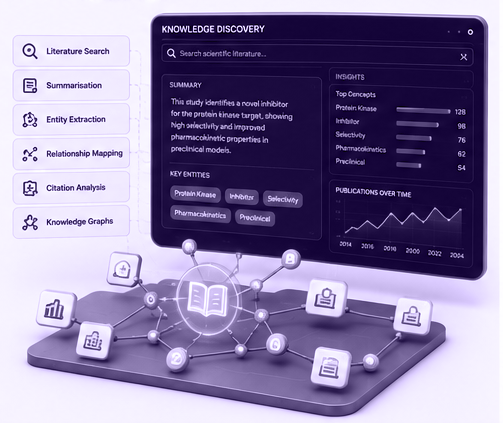
AI that connects and extracts insights across experimental data, scientific literature and research knowledge.
ML workflows that process experimental and imaging datasets with speed and reproducibility.
AI models that accelerate discovery, from molecular screening to materials optimisation.
Computer vision tools monitor experiments in real time and flag anomalies automatically.
Uncover patterns and connections that manual analysis would miss across large datasets.
Standardised AI pipelines improve consistency and traceability across experiments.
Compress research timelines by automating screening, analysis and knowledge synthesis.
Automate experimental monitoring and analysis to reach validated results faster.
A strategic overview of the research domains where our AI and engineering software most effectively accelerate the path from data to discovery.
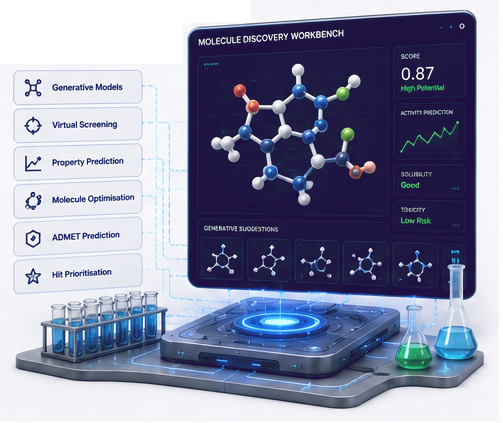
Generative AI and predictive modelling that accelerate compound screening, molecular optimisation and early-stage therapeutic research.
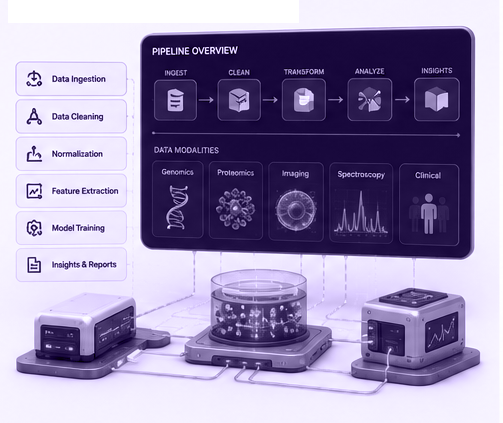
Scalable machine-learning workflows that process experimental, imaging and simulation datasets with greater speed and reproducibility.
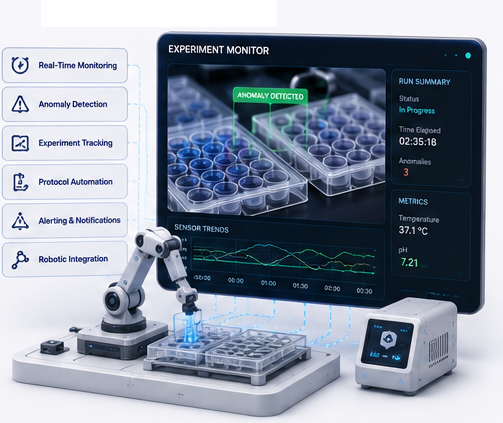
Computer vision and automation tools that monitor experiments in real time and flag anomalies for researcher review.
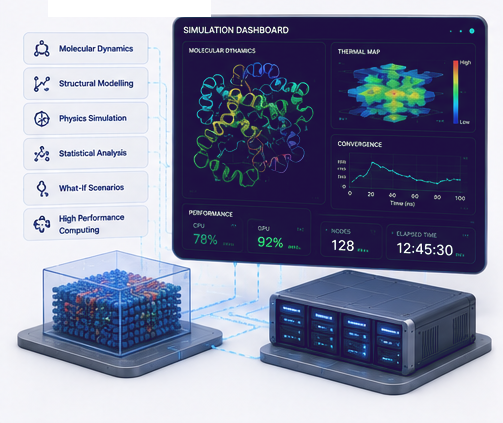
Custom scientific and engineering software for simulation, statistical modelling and quantitative analysis.
AI that connects insights across scientific literature, experimental data and research knowledge.
Flexible deployment architectures designed to integrate with HPC environments, cloud platforms and institutional research infrastructure.
Tell us about your experiment, data or discovery challenge — our team will get back to you within one business day.
Talk to Our Team