Repeated Scans
Clear reconstruction can require several acquisitions of the same region.
From classical reconstruction to advanced 3D AI with channel attention
Research conducted during the BINARIS founder's postdoctoral research at the University of Adelaide, before BINARIS was established.
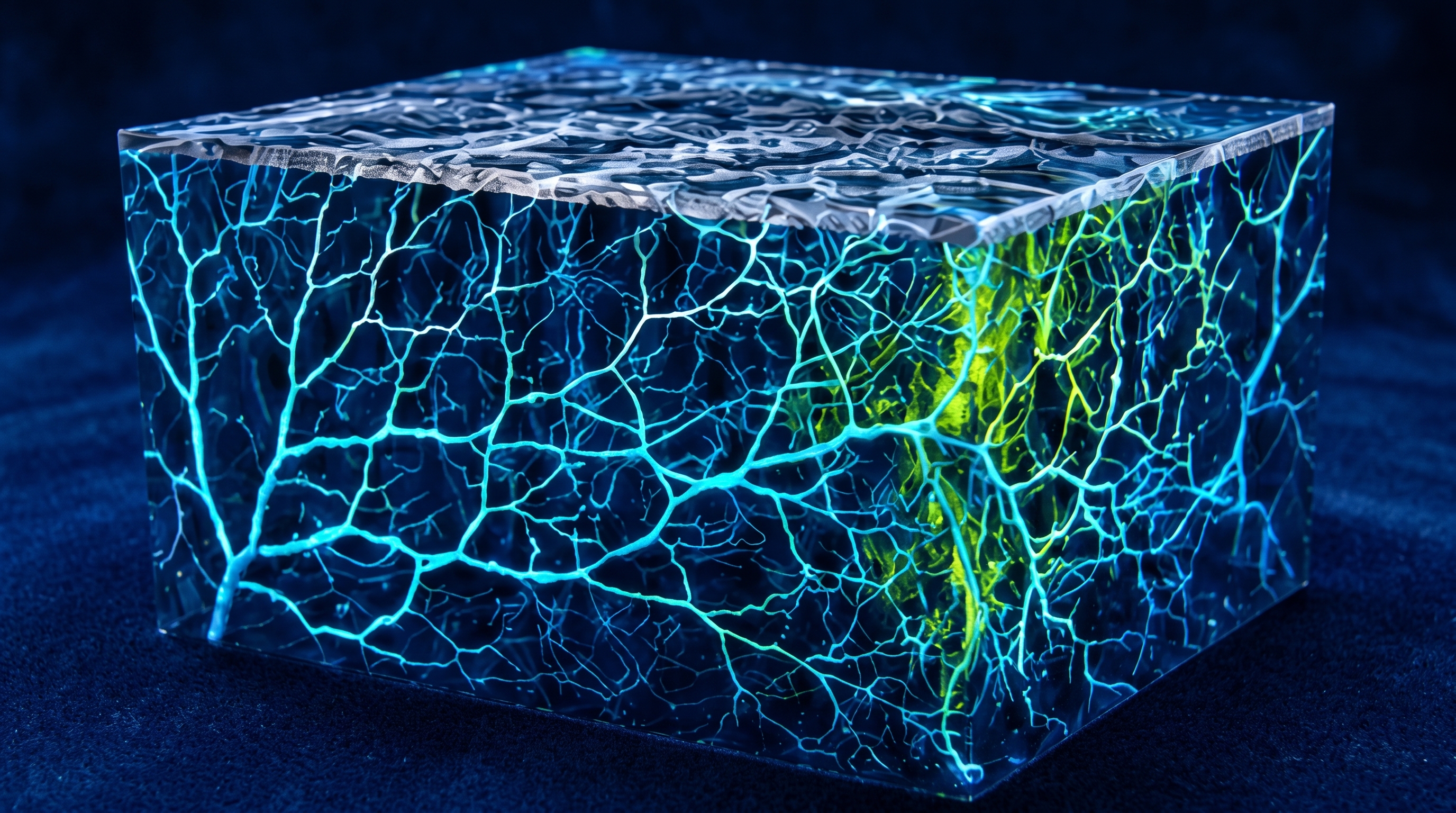
Conceptual visualisation of AI-enhanced microvascular imaging
Advanced imaging systems often require multiple repeated scans to achieve clear reconstruction, increasing acquisition time, processing demands and sensitivity to movement.
Clear reconstruction can require several acquisitions of the same region.
More acquired data increases reconstruction workload and processing requirements.
Longer and repeated acquisition makes imaging more vulnerable to patient movement.

Deep learning reconstruction outperformed classical methods in image quality using fewer repeated scans.
Same data. Better reconstruction.
Adding full 3D context and channel attention further improved fine detail recovery and structural consistency.
More context. Smarter focus. Cleaner results.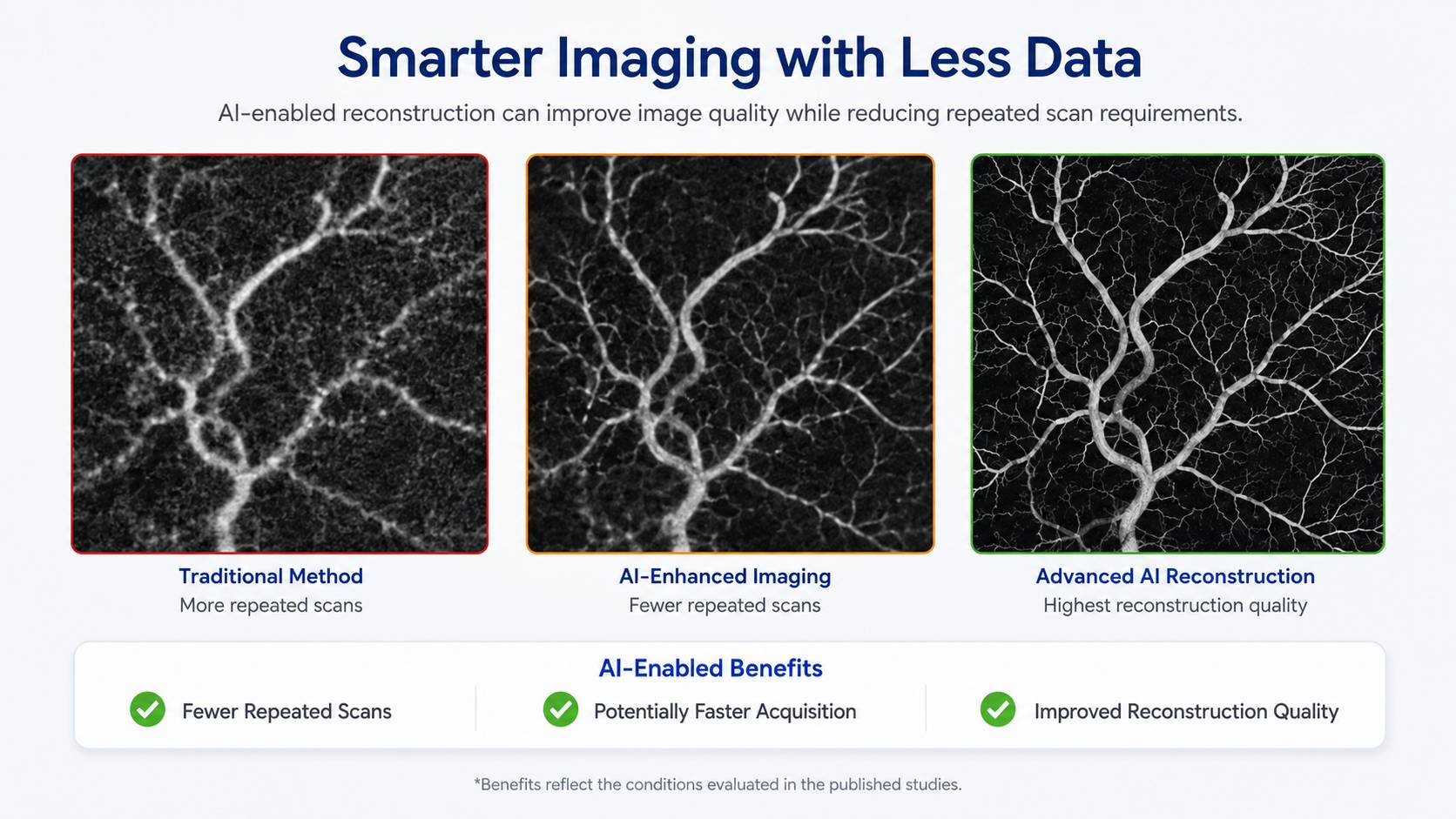

AI reconstruction achieved comparable or higher image quality using 2 repeated scans instead of 4, indicating potential efficiency gains in data acquisition and processing under the evaluated conditions.
Based on the conditions evaluated in the published studies.

*Under the conditions evaluated in the published studies.

Fewer repeated scans may lower acquisition time and resource requirements under evaluated conditions.

Potential to streamline acquisition and processing workflows while maintaining reconstruction quality under evaluated conditions.

Enhanced resilience to motion and noise in challenging imaging scenarios.

Models designed for application across datasets and imaging conditions, subject to validation.
*Under the conditions evaluated in the published studies.

Advanced methods for reconstructing high-quality images from complex acquisition data.

Designing and training 3D models that capture spatial context for superior reconstruction.

Using attention mechanisms to focus on the most informative features and channels.

Adapting AI to the unique characteristics of advanced imaging modalities.

Rigorous, reproducible evaluation to validate performance under real-world conditions.

Turning advanced research into robust, practical engineering solutions.
Demonstrates that AI reconstruction can match or exceed classical methods using half the number of repeated scans in human skin microvasculature OCTA.
View Publication ↗Shows that adding 3D context and channel attention further improves microvascular detail and structural consistency with the same reduced scan protocol.
View Publication ↗This research is presented as evidence of the founder's prior technical experience. It was not delivered as a BINARIS client project. It does not imply affiliation or endorsement by any participating authors or institutions.